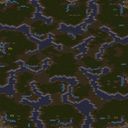
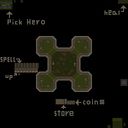
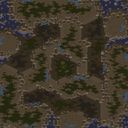
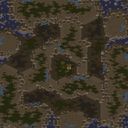
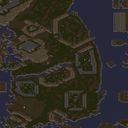
(4)Vertigo Plus는 화산 타일셋 위에 펼쳐진 2대2 팀플 전용 비대칭 유즈맵으로, 익숙한 본진 싸움에 공간 감각을 뒤흔드는 착시 구조를 결합한 점이 독특하다. 맵의 핵심 콘셉트는 제목과 내부 설명이 암시하듯 “다른 시점에서 적을 바라보는” 경험이다. 네 명의 플레이어는 각자 분리된 본진에서 시작하지만, 전장은 단순한 사각 평면이 아니라 중앙을 가로지르는 거대한 대각선 단층과 비틀린 지형들로 구성된다. 시각적으로 화산 지형 특유의 어두운 용암 지대와 날카로운 절벽이 뒤섞여 있어, 미니맵만 믿고 이동하다가는 길을 잘못 들어 고립되거나 아군과 합류 타이밍을 놓치기 쉽다. 진행 방식은 전형적인 섬멸전 규칙을 따르지만, 유즈맵 장르로 분류된 만큼 일반적인 래더 게임과는 다른 플레이 흐름을 보인다. 자원 배치와 지형 높낮이가 균등하지 않아 팀원 간 역할 분담이 자연스럽게 유도된다. 한쪽은 상대적으로 안전한 고지대에서 방어와 확장을 맡고, 다른 쪽은 적극적으로 중앙을 장악하며 시야 싸움을 주도하는 식이다. 착시 효과는 단순한 장식이 아니라 전술적 요소로 작용한다. 예를 들어, 상대가 멀게 느껴지는 각도에서는 실제 거리보다 진입 경로가 길고, 반대로 가까워 보이는 지점은 좁은 골짜기에서 예상치 못한 교전을 유발한다. 이 때문에 시야 확보를 위한 유닛 배치와 미니맵을 수시로 확인하는 습관이 승패를 가르는 중요한 습관이 된다. 플레이 경험은 같은 맵을 반복할수록 새로운 길과 각도가 보이는 입체적인 성격을 띤다. 첫 판에서는 낯선 착시에 당황하지만, 두세 판이 지나면 상대의 시선을 역으로 이용하는 심리전을 즐길 수 있다. 속도감 있는 교전보다는 신중한 위치 선정과 타이밍 싸움이 강조되며, 한 번의 과감한 우회 기동이 게임 전체를 뒤집는 순간을 만들어내기도 한다. 다만 비대칭 구조에 적응하지 못하면 답답함을 느낄 수 있으므로, 일반적인 대칭형 맵에서 빠른 피지컬을 선호하는 플레이어보다는 협동과 전략적 사고에 무게를 두는 팀 플레이어에게 추천한다. 플레이 전에는 반드시 팀원과 간단히 지형을 함께 살펴보고, 아군과 적군의 예상 이동 경로를 미리 공유하는 것이 좋다. (4)Vertigo Plus is an asymmetric UMS map designed for 2v2 team play on a volcanic tileset, blending familiar base combat with an optical illusion that disrupts spatial awareness. Its core concept, hinted at by the title and internal description, is to "try seeing enemies from a different perspective." The four players start on separate islands, but the battlefield is not a simple flat plane. A massive diagonal fault line cuts through the center, accompanied by twisted terrain features that warp the sense of distance. The dark lava zones and sharp rock formations characteristic of the volcanic set create a visual maze where relying solely on the minimap can lead to isolation or missed team rendezvous. The game follows standard melee destruction rules, yet its classification as a Use Map Settings scenario signals a different flow from typical ladder matches. Resource placement and terrain elevation are intentionally uneven, naturally nudging teammates into distinct roles. One player might hold a relatively safer high ground for defense and expansion, while the other aggressively controls the center to provide vision and skirmish. The optical trick serves as a tactical layer rather than mere decoration. From certain angles, an apparently close enemy is actually separated by a long, winding path, while a seemingly distant point may hide a narrow gorge that invites sudden ambushes. This makes constant minimap checking and vision-granting unit placement decisive habits for victory. The play experience becomes more dimensional as you replay the map, revealing new routes and sightlines with each session. A newcomer may feel disoriented by the unfamiliar perspective, but after a couple of games the map transforms into a mind-game arena where exploiting the opponent's visual assumptions is key. The emphasis lies on careful positioning and timing rather than raw speed, and a single bold flanking maneuver can overturn the entire match. Because the asymmetric layout can feel suffocating to those who cannot adapt, the map is recommended for team players who value cooperation and strategic planning over pure mechanics found on symmetrical battlegrounds. Before starting, it is crucial to scout the terrain together with your ally and agree on the likely movement paths of your foes.

로그인 하시고 댓글을 남겨 볼까요?