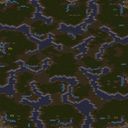
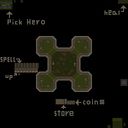
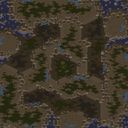
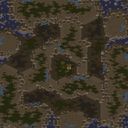
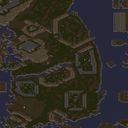
이 맵은 사막 타일셋을 배경으로 여덟 명이 함께 생존과 협동을 시험하는 유즈맵이다. 시작 지점은 전체 지도에서 중앙보다 약간 아래쪽에 몰려 있으며, 각 플레이어는 좁은 입구를 가진 개별 구역에 배치된다. 입구 쪽에는 민간인, 저글링 같은 아군 유닛이 소수 제공되고, 초반부터 저글링 맹독충이 몰려오는 이벤트가 발생해 빠른 대응을 요구한다. 자원 채취보다 유닛 보존과 지역 방어가 우선이며, 구조물을 활용해 진입로를 좁히거나 유닛을 재배치하는 플레이가 자연스럽게 유도된다. 중앙부는 넓은 개활지로 설계되어 있으나, 실제 전투는 플레이어 구역 앞쪽 복도와 계단 형태의 지형에서 주로 벌어진다. 적 유닛은 정해진 경로를 따라 몰려오기보다 여러 방향에서 산발적으로 등장하며, 일정 시간이 지나면 공격 주기가 빨라지고 체력이 높은 언데드 유닛이 섞여 들어온다. 특정 지점에는 체력 회복이나 추가 유닛을 제공하는 비콘과 스위치가 배치되어 있어, 아군과 역할을 나누어 해당 지점을 점유하거나 활성화하는 협동이 요구된다. 지형 자체는 단순한 편이지만, 건물을 지을 수 있는 공간이 제한되어 있고 자원량도 많지 않아 플레이어 간에 유닛을 주고받거나 방어 구간을 나누는 소통이 필요하다. 진행 방식은 웨이브 기반 생존에 가깝지만, 일정 조건을 만족하면 중앙으로 진출해 보스를 상대하는 국면이 열린다. 이때 한 명이라도 이탈하면 전체 방어선이 무너지기 쉬우므로, 시야를 공유하며 유닛을 집중시키는 협력이 생존을 좌우한다. 초반에는 마린과 파이어뱃 위주로 버티다가, 후반으로 갈수록 시즈 탱크와 고스트 같은 유닛이 추가되며 공성 및 특수 능력 활용이 중요해진다. 다만 유닛 생산 건물은 일부만 주어지고 업그레이드도 제한적이어서, 주어진 자원을 어디에 투자할지 빠르게 판단해야 한다. 전체적으로 이 맵은 빠른 템포와 지속적인 긴장감을 제공하며, 여덟 명이 모두 제 역할을 해야 클리어가 가능한 구조다. 초보자보다는 유즈맵 생존류에 익숙한 플레이어나, 친구들과 음성 채팅을 통해 호흡을 맞추려는 그룹에게 추천한다. 시작 전에 모든 플레이어가 입구 유닛 배치와 중앙 비키 활용 순서를 간단히 합의해두면 실패 확률을 크게 줄일 수 있다. 혼자서는 버티기 어렵고, 각자 위치에서 동시에 압박이 들어오므로 인원이 부족할 경우 난이도가 급격히 올라간다. This map is a survival-based UMS set on a desert tileset, designed for eight players to test their cooperation and endurance. The starting positions are clustered slightly below the center of the map, with each player placed in an individual compartment featuring a narrow entrance. A small number of units such as Marines and Firebats are provided at the start, and an early event sends waves of zerglings and banelings toward the players, demanding immediate attention. Rather than focusing on resource gathering, the priority lies in preserving units and maintaining a defensive line, and the layout naturally encourages players to tighten the entrance or reposition units. The central area is shaped as a wide open space, but most combat takes place in the corridors and stepped passages directly in front of each player’s section. Enemy units do not follow a single predictable path; instead, they appear from multiple directions simultaneously, and as time passes the attack tempo increases while high-health undead-type units begin to appear. Beacons and switches that provide healing or additional units are placed at key locations, requiring the team to divide roles and decide who activates them at the right moment. Although the terrain itself is relatively simple, buildable space is limited and the resource count is low, so players must trade units and coordinate their defensive zones through active communication. The game progresses in a wave-based survival format, and after meeting certain conditions a path to the center opens up, allowing players to counterattack a boss-level threat. At this stage, if even one player loses their position, the entire formation can collapse, so shared vision and concentrated unit control become essential. During the early waves, marines and firebats form the backbone of defense, while later stages introduce siege tanks and other special-purpose units, making siege and ability management increasingly important. Because only a few production buildings are available and upgrades are restricted, deciding how to spend the limited resources quickly is a key factor in survival. Overall, the map delivers a fast-paced and persistently tense experience, and it is designed so that all eight players must fulfill their roles to succeed. It is recommended for players who are already familiar with UMS survival scenarios or for groups who enjoy coordinating through voice chat. Before starting, a quick agreement on initial unit placement and the order of activating central beacons can greatly reduce the chance of failure. Surviving alone is extremely difficult, and because pressure arrives simultaneously from multiple angles, the difficulty spikes sharply when the team is not full.

로그인 하시고 댓글을 남겨 볼까요?